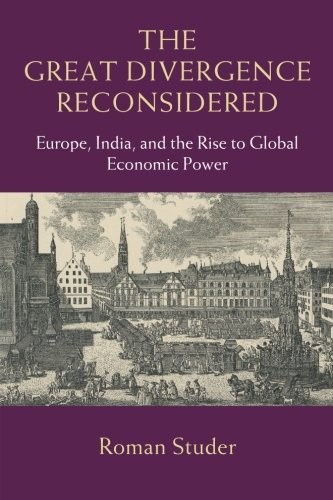
Contrary to popular narratives, 'The Great Divergence Reconsidered' shows that Europe's rise to its current status as an undisputed world economic leader was not the effect of the Industrial Revolution, nor can it be explained by coal or colonial exploitation. Using a wealth of new historical evidence, Roman Studer shows that the Great Divergence occurred in the seventeenth century, if not earlier. When compared to India and other parts of the Asiatic world, early modern Europe was characterized by a more powerful transportation system, bigger trade flows, larger and better integrated markets, higher productivity levels, and superior living standards, even before the Industrial Revolution brought about far-reaching structural changes and made Europe's supremacy even more pronounced. Thus, an interplay of various factors best explains Europe's early and gradual rise, including better institutions, favorable geographical features, increasing political stability, and increasingly rapid advances in science and technology. Studer shows that institutional, geographical, political, and technological factors account for Europe's rise to undisputed world economic leader.
Editions · 5
Tags
Similar to this
Nothing similar yet — this fills in as members shelve and rate more books.
Reviews
No reviews yet
The first word is yours.