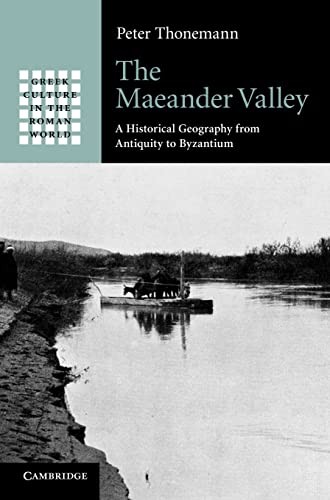
"This is a study of the long-term historical geography of Asia Minor, from the fourth century BC to the thirteenth century AD. Using an astonishing breadth of sources, ranging from Byzantine monastic archives to Latin poetic texts, ancient land records to hagiographic biographies, Peter Thonemann reveals the complex and fascinating interplay between the natural environment and human activities in the Maeander valley. Both a large-scale regional history and a profound meditation on the role played by geography in human history, this book is an essential contribution to the history of the Eastern Mediterranean in Graeco-Roman antiquity and the Byzantine Middle Ages"-- "Cratylus used to criticise Heraclitus for saying that it was impossible to step into the same river twice. He thought that it was impossible to step into the same river once.1 The fall of tralles, AD 1284 In the spring of the year AD 1280, the young future emperor Andronicus II Palaeologus led an army south from Constantinople into Asia Minor. Twenty years of Palaeologan rule had not been kind to the old Byzantine heartlands. After the recovery of Constantinople from the Latins in 1261, the emperor Michael VIII Palaeologus had kept his attention firmly trained on the European west. The Anatolian borderlands, the fertile coastal valleys of the Hermos, Cayster and Maeander, had largely been abandoned to their fate at the hands of the nascent Turkish warrior beyliks. Only at the very end of his life, between 1280 and 1282, did Michael make any concerted attempt to restore Byzantine authority in western Asia Minor, and by then, as would rapidly become apparent, it was far too late.2 Arriving in the valley of the river Maeander, and travelling eastwards along the north bank of the river, Andronicus passed the ruins of the ancient city of Tralles. Struck by the charms of the place, and the natural defensibility of the plateau on which the city stood, Andronicus decided to restore the ruined town as a place of refuge for the local Greek rural population (Fig. 1.1). "--
Editions · 5
Tags
Similar to this
Nothing similar yet — this fills in as members shelve and rate more books.
Reviews
No reviews yet
The first word is yours.